🌱 Getting Started
Companion Planting That Actually Works
Companion planting for UK veg gardens — the pairings with real evidence behind them, from carrots and onions to the Three Sisters, and the myths to ignore.

Some links on this page are affiliate links. If you buy through them we may earn a small commission, at no extra cost to you. We only recommend things we think are genuinely useful for home growers.
The short version
- Plant flowers for predators — calendula, poached-egg plant and single marigolds among the veg pull in hoverflies and ladybirds that eat aphids; the most dependable win there is.
- Carrots with onions — a row of onions helps mask the carrot scent from carrot root fly; partial, so back it up with a 60cm fleece or mesh barrier.
- Three Sisters — sweetcorn, climbing beans and squash together, but plant out only in early June once soil has warmed, in a warm sheltered spot, with corn in a block.
- Trap crops need managing — nasturtiums decoy blackfly and caterpillars, but check and remove the worst or they just breed pests onto your beans.
- Ignore the "friends and enemies" charts — most are folklore; spacing, soil and sunlight matter far more than which crop sits next to which.
Companion planting is the idea that growing certain plants together helps them — by confusing pests, pulling in helpful insects, or sharing space cleverly. Some of it genuinely works. A lot of it, sadly, is folklore that's been copied from one book to the next without anyone checking. This guide separates the two so you spend your effort where it counts.
What companion planting is and what is myth
At its heart, companion planting just means putting plants near each other on purpose, because the combination does something useful. That "something" usually falls into one of a few categories: masking a crop's scent from a pest, drawing pollinators and predatory insects in, sacrificing one plant to spare another, or making the best use of a patch of ground.
The trouble is that the popular planting charts — the ones that pair every vegetable with three friends and two enemies — are mostly handed-down tradition. Plenty of those pairings have never been tested, and several that have been tested don't hold up. That doesn't make the whole idea worthless. It means you should treat the charts with healthy suspicion and lean on the handful of combinations that have real evidence behind them.
A good rule of thumb: if a pairing has a clear mechanism you can explain — a scent that confuses a fly, a flower that feeds a hoverfly — it's worth trying. If the only reason given is that two plants are "good friends", be sceptical.
Honesty first
Companion planting is a useful tool, not a force field. It nudges the odds in your favour. It won't replace healthy soil, sensible spacing and the occasional bit of netting — so think of it as one layer of an organic, no-spray approach, not a magic fix.
Pairings with real evidence
A few combinations earn their place because there's a sound reason — and often some research — behind them.
Carrots and onions
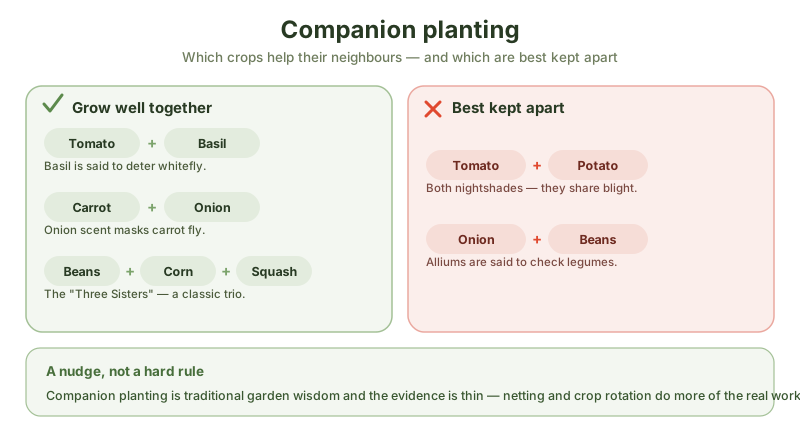
This is the classic, and it has logic on its side. Carrots are plagued by carrot root fly, a low-flying pest that hunts by smell. Onions, leeks and garlic give off a strong scent of their own, and growing a row of onions alongside your carrots can help mask the carrot smell that draws the fly in. In return, the carrot foliage can muddle onion fly.
It isn't foolproof — the effect is partial, and a bad carrot-fly year will still find your crop. But it's free, it costs you nothing in space, and the two crops genuinely suit each other in the bed. Pair it with a 60cm barrier of fleece or fine mesh and you've got a proper defence. There's more detail in the full guide to growing carrots.
The Three Sisters
This is the most famous working combination in all of gardening, and for good reason. The "three sisters" are sweetcorn, climbing beans and squash, grown together in one patch:
- Sweetcorn grows tall and gives the beans something to climb, saving you canes.
- Climbing beans are a legume — they fix nitrogen from the air at their roots, feeding the hungry sweetcorn over the season.
- Squash sprawls across the ground, its big leaves shading out weeds and keeping the soil cool and moist.
Each plant does a job the others benefit from. In the UK it needs a warm, sheltered, sunny spot to work — sweetcorn is borderline in a cool summer — so give it your best ground and don't plant out until early June once the soil has warmed. Sow the corn in a block rather than a single row so it pollinates properly.
Flowers for pollinators and predators
This is the part of companion planting with the strongest evidence of all. Flowers grown among or beside your veg pull in two kinds of useful insect: pollinators that set your courgette, bean and squash flowers, and predators — hoverflies, lacewings, ladybirds, parasitic wasps — whose larvae devour aphids by the hundred.
Calendula, poached-egg plant, phacelia, borage and single-flowered marigolds are all reliable draws. The effect is real and well documented: a border or two of the right flowers measurably increases the predatory insects working your plot. Our companion flowers guide covers which to sow and where, and the broader pollinator plants list takes it further.
Easiest win on the plot
If you only do one thing from this article, sow a few calendula and poached-egg plants among the veg. They self-seed, they're cheerful, and they bring in the aphid-eaters for free. It's the most dependable bit of companion planting there is.
Trap crops and sacrificial planting
A trap crop is a plant you grow specifically to attract a pest — and then sacrifice — so the pest leaves your real crop alone. It feels counter-intuitive, but it works because many pests have a strong preference.
Nasturtiums are the best-known example. Blackfly and cabbage white caterpillars often go for nasturtiums in preference to your beans and brassicas, so a few plants at the edge of a bed act as a decoy. You can then squash the aphids on the nasturtiums or simply pull the worst-infested plants and bin them, taking the pests with them.
Other trap-cropping ideas worth a try:
- Mustard or a few spare brassica leaves to lure flea beetle away from your salad rocket.
- A sacrificial row of early lettuce to take the first slug pressure off your maincrop.
The catch with any trap crop is discipline: a trap only helps if you act on it. Left alone, your nasturtiums just become a breeding ground that exports blackfly back onto your beans. Check them, and remove the worst before the pest spreads. It pairs well with the hands-on tactics in our organic growing guide.
A trap crop only helps if you remove the pests
- Blackfly and cabbage white caterpillars often prefer nasturtiums to beans and brassicas.
- Squash aphids on the trap, or pull the worst-infested plants and bin them, taking the pests with them.
- Left alone, nasturtiums become a breeding ground that exports blackfly back onto beans.
Plants that genuinely repel or attract
Some plants have a measurable effect on insects through scent or chemistry — though usually a modest one, not the dramatic "force field" the charts promise.
Strong-scented herbs and alliums. The aromatic oils in mint, rosemary, chives and onions can mask the scent of a target crop or deter some egg-laying pests. Planting chives among carrots, or basil near tomatoes, is more about masking than repelling — and the effect is partial, so don't rely on it alone.
Flowers that feed predators (again). Worth repeating, because it's the most dependable "attract" effect you have. Anything that brings in hoverflies and parasitic wasps is doing real pest control on your behalf. See our notes on attracting beneficial insects.
French marigolds (Tagetes). These have a genuine, if specific, reputation: their roots release compounds that suppress some soil nematodes, and the scent can deter whitefly in a greenhouse. Single-flowered types are better for pollinators than the frilly doubles.
Don't over-promise
"Repels pests" rarely means "keeps every pest away". Most of these effects are partial and depend on having enough plants, close together, in the right conditions. Treat them as a supporting cast — pair them with netting, good spacing and healthy soil, and they earn their keep. On their own, they'll disappoint you.
The myths to ignore
Plenty of well-worn companion-planting claims don't survive a second look. You can safely ignore these:
- Detailed "friends and enemies" charts. The sprawling tables that pair every vegetable with specific allies and foes are mostly tradition, not evidence. Spacing, soil and sunlight matter far more than which crop sits next to which.
- "Plant X to make Y taste better." Basil near tomatoes won't change the flavour of your tomatoes. It's a nice use of space, but the taste claim is folklore.
- Marigolds repelling all pests everywhere. They have specific, modest effects (nematodes, some whitefly). They are not a general-purpose pest shield for the whole plot.
- Most "antagonist" warnings. Claims that onions stunt beans, or that certain crops "hate" each other, rarely hold up. The real reason a crop struggles is almost always shade, hunger or crowding — not a grudge against its neighbour.
None of this means companion planting is a waste of time. It means you should back the combinations with a clear mechanism — carrots and onions, the Three Sisters, flowers for predators, trap crops you actually manage — and let go of the rest.
For the bigger picture of how this fits a chemical-free plot, head back to the organic, no-spray growing guide, which ties companion planting together with healthy soil, barriers and encouraging wildlife. And if you're just getting your beds going, the getting started hub walks you through the foundations first.
A handful of flowers and a sensibly mixed bed will do more for your garden than any planting chart. Start there, watch what the insects do, and let your own plot teach you the rest.
Key terms in this guide
- Legume
- — A member of the pea and bean family that fixes nitrogen from the air through its roots, enriching the soil for the crops that follow.
Frequently asked questions
Does companion planting really work?
What grows well together?
Keep reading

Organic, No-Spray Growing for Beginners
How to grow food organically with no sprays in the UK — feeding the soil, working with wildlife, and managing pests and weeds naturally for a healthy plot.

Companion Flowers to Grow Among Your Vegetables
The best companion flowers for a UK veg garden — marigolds, nasturtiums, calendula and borage that pull in pollinators and predators and confuse pests.

How to Grow Carrots at Home in the UK
Complete beginner's guide to growing carrots in the UK — best varieties, sowing dates, thinning, and avoiding carrot root fly for a sweet, straight crop.