🌱 Getting Started
Crop Rotation Explained (Simply)
Crop rotation explained for UK beginners — why you move crops around, a simple four-bed plan, and how it cuts pests and disease and keeps soil healthy.

Some links on this page are affiliate links. If you buy through them we may earn a small commission, at no extra cost to you. We only recommend things we think are genuinely useful for home growers.
The short version
- The idea — don't grow the same family of veg in the same soil two years running; move them around instead.
- Why bother — it cuts pests, slows soil-borne disease like clubroot, and keeps the soil's nutrients in balance.
- Four groups to track — potatoes, legumes (peas and beans), brassicas (cabbage family), and roots and onions.
- The four-bed plan — give each group a bed and shuffle the lot along one bed each year: potatoes → legumes → brassicas → roots and onions → back to potatoes.
- The clever bit — legumes leave nitrogen behind for the hungry brassicas that follow, so snip pea and bean tops off and leave the roots in the soil.
- Don't overthink it — plan it on paper over winter, keep a note of what grew where, and a roughly-right rotation beats an agonised-over perfect one.
Crop rotation sounds like something you need a clipboard and a spreadsheet for, but it isn't. The whole idea is simple: don't grow the same kind of vegetable in the same patch of soil year after year. Move things around instead. In this guide you'll learn why that matters, the handful of crop groups to keep track of, and a four-bed plan you can copy straight away.
It's one of the oldest tricks in growing your own, and it costs nothing — just a little planning each winter. Get it roughly right and you'll head off some of the most common beginner disappointments before they happen.
Why rotate (pests, disease and soil balance)
Plants in the same family tend to suffer from the same problems. Grow them in the same spot repeatedly and you give those problems a permanent home.
There are three things rotation helps with.
Pests. Many pests overwinter in the soil or nearby, then emerge to attack the crop they fancy. Move that crop to the far side of the plot and the pest has further to travel and less chance of finding it. Onion white rot and carrot root fly are classic examples that build up where the same roots return each year.
Disease. Some soil-borne diseases linger for years once established. The worst for beginners is clubroot in brassicas, which swells and distorts the roots of the cabbage family and can survive in the ground for up to two decades. Rotating brassicas onto fresh ground each year slows its spread and stops you handing it an easy victory. Potato and tomato blight, and onion white rot, all reward you for not repeating yourself in the same bed.
Soil balance. Different crops take different things from the soil and leave different things behind. Hungry brassicas strip a lot of nitrogen; peas and beans actually add some back (more on that below). Rotate well and the soil gets a varied workout rather than being drained of the same nutrients in the same place every season. It pairs neatly with improving your soil and feeding it with home-made compost.
It's a tool, not a rule
Rotation reduces problems — it doesn't eliminate them, and a few crops (sweetcorn, courgettes, salad leaves) barely care where they go. Treat it as a sensible default, not a law. A roughly-right rotation beats an agonised-over perfect one.
The main crop groups
You don't need to track every vegetable individually. Sort them into a few families and rotate the families. Here are the four groups most UK rotations use.
Potatoes (and the tomato family). Potatoes, plus their relatives tomatoes and, loosely, the tomato-family crops. Potatoes are greedy and like soil enriched with plenty of muck or compost, and they break up the ground nicely for whatever follows.
Legumes — peas and beans. A legume is any member of the pea and bean family. This group includes peas, runner and French beans and broad beans. Their party trick is feeding the soil, which is why where they sit in the rotation matters.
Brassicas — the cabbage family. A brassica is the cabbage clan: cabbage, kale, broccoli, Brussels sprouts, cauliflower, plus quieter members like swede, turnip and radish. They're hungry, prone to clubroot and the favourite of cabbage white caterpillars, so they benefit most from moving around. They like firm soil with plenty of nitrogen — exactly what the legumes leave behind.
Roots and onions. Carrots, beetroot, parsnips and the onion tribe — onions, garlic, shallots and leeks. These prefer soil that isn't freshly manured (fresh muck makes carrots fork and onions go soft), so they're happy following a hungrier crop that has used up the richness.
A few crops sit outside these groups — courgettes, sweetcorn, salad leaves, squash. Slot them in wherever there's a gap; they're not fussy.
A simple four-bed plan
Split your growing space into four roughly equal beds or zones. Each group gets one bed, and every year the whole lot shuffles along by one. After four years they're back where they started, and the soil in each bed has had a full year off from every family.
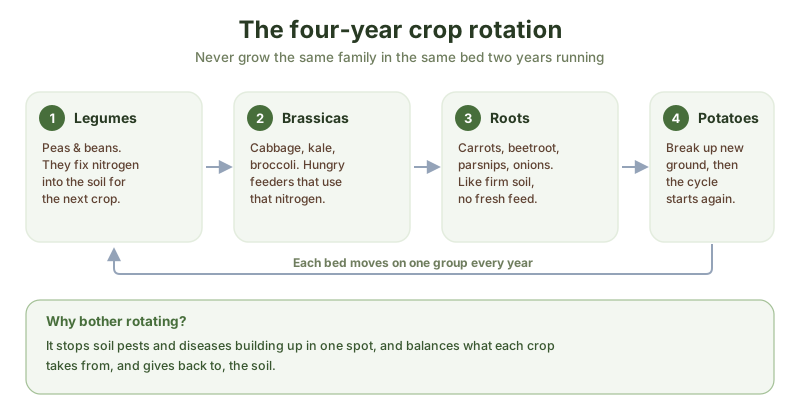
The order matters, because each group sets up the next:
| Year | Bed 1 | Bed 2 | Bed 3 | Bed 4 |
|---|---|---|---|---|
| Year 1 | Potatoes | Legumes | Brassicas | Roots & onions |
| Year 2 | Legumes | Brassicas | Roots & onions | Potatoes |
| Year 3 | Brassicas | Roots & onions | Potatoes | Legumes |
| Year 4 | Roots & onions | Potatoes | Legumes | Brassicas |
Read down any single bed and you'll see the logic of the cycle: potatoes → legumes → brassicas → roots and onions → back to potatoes.
- Potatoes first. You dig in plenty of compost or manure for them, and lifting the crop breaks up and clears the ground beautifully.
- Legumes next, into that still-decent soil. They take their nitrogen from the air rather than the soil, so they leave it richer than they found it.
- Brassicas follow the legumes to cash in on that leftover nitrogen — exactly what these hungry, leafy crops want.
- Roots and onions last, when the soil has mellowed and the richness has been used up — just how carrots and onions like it, with no fresh muck to make them fork or rot.
When to plan it
Do your rotation on paper over winter — December and January, mug of tea in hand — so beds are mapped before the first sowings. Fold it into your wider month-by-month plan so nothing gets double-booked come spring.
How legumes feed the brassicas that follow
This is the clever bit that makes the order worth getting right. Peas and beans have a quiet partnership with bacteria living in nodules on their roots. Those bacteria pull nitrogen out of the air and turn it into a form the plant can use — so legumes feed themselves rather than draining the soil.
When the crop finishes, don't pull the plants up by the roots. Snip the tops off at ground level and leave the roots in the soil. As they rot down they release that stored nitrogen right where the next crop will need it.
And the next crop is the brassicas — leafy, hungry, nitrogen-loving cabbages, kale and broccoli. They land in a bed the legumes have effectively pre-fertilised for free. It's the single neatest reason to keep the groups in order, and it's why peas and beans always sit just before the cabbage family in the cycle. If you want to push the soil-feeding further, you can follow the same logic with green manures on any bed that would otherwise sit bare over winter.
Leave legume roots to feed brassicas
- Bacteria in root nodules pull nitrogen from the air for the plant.
- Snip the tops off at ground level and leave the roots in the soil.
- Brassicas follow legumes to cash in on that leftover nitrogen.
Using the rotation planner
Keeping four beds straight across four years in your head is the bit that trips people up. You don't have to. The crop rotation planner lets you assign each group to a bed and shows you what goes where next year and the year after, so you can sketch the whole cycle in a couple of minutes.
It also flags the awkward cases — where you've accidentally put brassicas back too soon, say — which is exactly where a written plan beats memory. Print it, pin it up in the shed, and you've got your sowing map for the season sorted.
Rotation in small spaces and containers
What if you haven't got four neat beds? Most beginners don't, and rotation still works — you just scale the idea down.
One or two beds. Divide what you have into sections and rotate within it. Even splitting a single bed into quarters and shuffling the four groups around gives you a three- or four-year gap on each patch. Half a loaf is far better than none, especially for clubroot-prone brassicas.
Containers. Growing in pots makes rotation almost effortless. The simplest move is to refresh or replace the compost each season — fresh compost is, by definition, ground your crop has never grown in, so the soil-borne pest and disease worry largely disappears. If you reuse compost, at least swap which crop goes in which pot so brassicas and onions aren't sitting in the same tired mix two years running.
Squeeze beds. If space is tight, prioritise rotating the troublemakers — brassicas (clubroot), onions (white rot) and potatoes (blight) — and relax about the easy-going crops like courgettes and salads, which can repeat without much fuss.
Keep a simple record
The only thing that makes rotation reliable is a note of what grew where. A scribble in a notebook, a photo of your planner, a line on the calendar — anything you'll still be able to read next January. Memory alone won't cut it once a couple of seasons have passed.
Crop rotation is one of those quiet habits that pays you back for years with almost no effort — fewer pests, less disease, steadier soil. Sketch your beds this winter, keep the groups in order, and it'll tick along in the background while you get on with the growing. For how it fits alongside successional sowing, storing your harvest and the rest of the seasonal jigsaw, head back to the grow-your-own year plan — the cornerstone this guide sits under.
Key terms in this guide
- Legume
- — A member of the pea and bean family that fixes nitrogen from the air through its roots, enriching the soil for the crops that follow.
- Brassica
- — The cabbage family of vegetables — including cabbage, kale, broccoli, cauliflower, sprouts and turnips — grouped together for crop rotation because they share pests and feeding needs.
Useful tools for this
Frequently asked questions
What is crop rotation?
What is a simple crop rotation plan?
Keep reading

Grow Your Own: A Beginner's Year Plan
A beginner's year plan for growing your own food in the UK — what to grow, how to plan a productive plot, and a realistic path to a kitchen full of homegrown veg.

How to Grow Cabbage at Home in the UK
Grow cabbage in the UK — spring, summer and winter types for year-round heads, with firm planting, pest netting, and beating clubroot and caterpillars.

How to Grow Onions and Shallots in the UK
Grow onions and shallots in the UK — planting sets or seed, spacing, feeding, and harvesting and storing a crop that lasts through winter.