🌱 Getting Started
How to Make Compost at Home
How to make compost at home in the UK — greens and browns, building and turning a heap, what to add, and turning kitchen and garden waste into free soil food.

Some links on this page are affiliate links. If you buy through them we may earn a small commission, at no extra cost to you. We only recommend things we think are genuinely useful for home growers.
The short version
- Balance greens and browns — aim for roughly half and half by volume; soft wet greens (peelings, grass) plus dry woody browns (torn cardboard, paper, leaves).
- Mix, moisture and air — keep it as damp as a wrung-out sponge, layer browns in as you go, and turn it occasionally to let air in.
- Pick a bin to suit you — a plastic "dalek" bin is the easy first choice; check for a subsidised council offer before buying retail.
- Be patient — a cold heap takes 6–12 months; a well-turned hot heap can be ready in 2–3 months, when it's dark, crumbly and smells of woodland.
- Keep the wrong things out — never add cooked food, meat, fish or dairy to an open heap or basic bin; they attract rats.
- The main pitfall — too many greens (especially grass) and not enough browns, which goes slimy and smelly; a handful of browns with every kitchen caddy prevents it.
Composting is the single most useful habit a new gardener can build. You take the things you would otherwise throw away — vegetable peelings, grass clippings, autumn leaves, cardboard — and you let nature turn them into a dark, crumbly, sweet-smelling material that feeds your soil for free. No special skill is needed, and almost nothing can go badly wrong that a little patience won't fix.
This guide walks you through the whole thing: what compost actually is, the one balance that matters most (greens and browns), how to choose a bin or build a heap, and how to know when your compost is ready to use.
Why bother making compost?
There are four good reasons, and they all point the same way.
It is free soil food. A bag of decent peat-free soil improver costs a few pounds at the garden centre. Your own compost costs nothing but the waste you were already producing.
It cuts what goes to landfill. Food and garden waste rotting in landfill produces methane, a potent greenhouse gas. The same material in your garden, with air around it, breaks down cleanly and stays out of the bin lorry.
It closes the loop. This is the quietly satisfying part. The peelings from the carrots you grew go back into the bed that grows next year's carrots. Nothing is wasted; the garden feeds itself.
It makes healthier soil. This is the big one. Compost is not really a fertiliser in the bagged, fast-acting sense — it works more slowly and more deeply than that. It feeds the worms, fungi and bacteria that make soil alive, improves the structure of both heavy clay and light sand, helps the ground hold water in summer and drain in winter, and slowly releases a balanced range of nutrients. A heap also quietly does its bit for wider garden life, drawing in the worms and other creatures that underpin a wildlife-friendly garden. If you only ever do one thing to improve your growing, adding home-made compost to your soil is it. It is also the engine behind the whole no-dig method, where you simply spread compost on the surface and let the worms do the digging.
Composting is hard to get wrong
Beginners often worry they'll "do it wrong". You almost can't. Organic matter rots whatever you do — a bin just makes it tidier and faster. The worst likely outcome is a slow, slightly smelly heap, and the fixes for that are simple.
What compost actually is
Compost is what you get when organic matter — anything that was once living, like plant material, peelings and cardboard — is broken down by microbes, worms, fungi and other small creatures into a stable, soil-like material. The finished product is dark brown, crumbly like fruit cake, and smells of damp woodland rather than anything unpleasant.
It is worth being clear about what compost is not. It is not a quick chemical feed. Bagged fertilisers deliver a measured hit of nitrogen, phosphorus and potassium that plants take up fast. Compost works differently: it improves the soil itself — its structure, its water-holding, its biology — and releases a gentle, broad mix of nutrients over months. For most beginners, that soil health matters far more.
To make it, you are really just steering a process that would happen anyway, so it goes faster, smells sweet rather than sour, and gives you a usable result. That steering comes down to one thing above all: the balance of greens and browns.
Greens and browns — the balance that matters most
If you remember nothing else from this guide, remember this. Compost ingredients fall into two groups, and you want a rough balance of both.
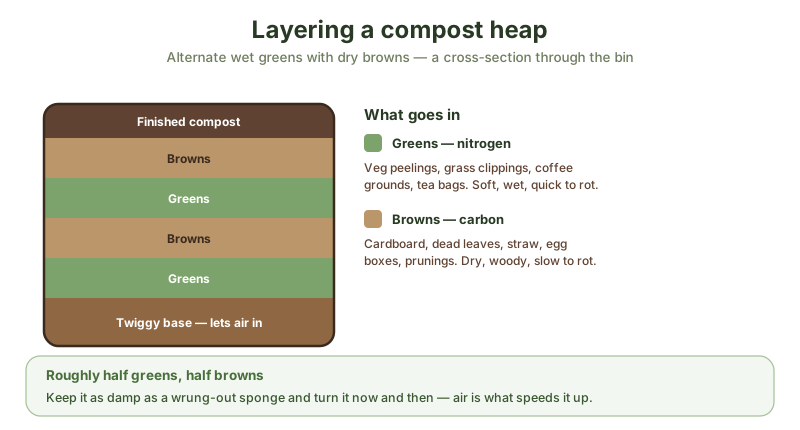
Greens are the soft, sappy, nitrogen-rich materials. They are usually moist and break down quickly. Examples:
- Vegetable and fruit peelings
- Grass clippings
- Fresh weeds and plant trimmings (avoid those gone to seed)
- Coffee grounds and tea (loose leaf, or bags only if you know they are plastic-free)
- Soft prunings and spent bedding plants
Browns are the dry, woody, carbon-rich materials. They break down slowly and add bulk and structure. Examples:
- Cardboard (torn up — egg boxes, kitchen-roll tubes, plain packaging)
- Scrunched-up paper and newspaper
- Dry autumn leaves (though large amounts are better made into leaf mould)
- Straw and dried plant stems
- Woody prunings (chopped small) and untreated wood shavings
Aim for roughly half and half by volume — think layers of each, or a couple of handfuls of browns every time you add a bin-caddy of kitchen greens. You do not need to weigh anything or get scientific. The mix forgives a fair bit.
The reason it matters: greens alone go slimy, airless and smelly (too much nitrogen and water, no structure). Browns alone sit there for years doing almost nothing (too much carbon, too little nitrogen and moisture). Together they feed the process and let air through. Most compost problems trace straight back to this balance — usually too many greens.
A simple rule of thumb
Soft, wet, green and fast-rotting = a green. Dry, brown, woody or papery = a brown. Grass clippings are the classic over-supplied green: always have a stash of torn cardboard next to the bin to layer in with them.
Choosing a bin or heap
You can compost in almost anything that lets air in and keeps rain mostly out. Here are the common UK options, from simplest to keenest.
A simple open heap. Just a pile in a quiet corner. Free and takes any volume, but it dries at the edges, looks untidy and is open to the rain. Fine on an allotment; less ideal in a small garden.
Plastic "dalek" bins. The cone-shaped bins most of us picture. They are cheap, tidy, hold warmth and moisture well, and have a hatch at the bottom to dig out finished compost. The catch is they are awkward to turn (you usually lift the whole bin off and fork the contents back in). Excellent first bin for most gardens.
Wooden pallet bays. Three or four heat-treated pallets wired together into a square, open at the front. Cheap or free, generous in size, and easy to fork and turn. A double bay (one filling, one maturing) is the allotment classic. Make sure any pallets are heat-treated (HT), not chemically treated — see the safety note below.
Tumblers. A drum on a frame that you spin to mix the contents. They make turning effortless and can compost fast, but they are smaller, pricier, and need a fairly even mix to work well. Good where neatness and speed matter more than volume.
Wormeries. A tiered system where composting worms eat your kitchen scraps and produce rich worm compost and a liquid feed. Brilliant for flats, balconies and small yards with mostly kitchen waste. We cover them fully in our guide to setting up a wormery.
Check for a subsidised council bin first
Many UK councils partner with schemes (often via getcomposting.com) to sell compost bins at a heavily reduced price — sometimes under £20 for a bin that would cost two or three times that retail. Search your council's name plus "compost bin offer" before you buy anything.
Safety: upcycled and reused containers
If you build or reuse a bin from salvaged materials, only use heat-treated (HT) pallets and timber — never wood treated with chemical preservatives, which can leach into compost you may later grow food in. Avoid any container that previously held oils, fuels or chemicals. We go through reusing materials safely in our guide to reusing and recycling around the garden.
Building the heap
Once you have somewhere to compost, building a good heap comes down to three things: mix, moisture and air.
Mix as you go. Don't add a great slab of one thing. If you tip in a full grass box, layer or fork in some torn cardboard with it. Alternating greens and browns — or at least adding browns regularly — keeps the balance roughly right and stops slimy, airless pockets forming.
Get the moisture right. The target is a wrung-out sponge — damp throughout, but not dripping. Squeeze a handful: it should feel moist and maybe release a drop or two, no more. Too dry and everything stalls; too wet and it goes anaerobic and starts to smell. If a covered bin dries out in summer, sprinkle water in; if an open heap gets sodden in winter, add dry browns and cover it.
Let air in. The microbes that make sweet compost need oxygen. This is what all those browns and that occasional turning are really for — they keep the pile open rather than compacted into an airless mat. A heap starved of air goes sour and slow.
A useful starting recipe when you first fill a bin: a layer of coarse browns at the bottom (twiggy prunings, scrunched cardboard) for drainage and airflow, then build up in roughly alternating layers of greens and browns, sponge-damp as you go. After that, just keep adding through the year.
Composting through the UK year
Spring and summer are when a heap really motors — warmth and plenty of green growth. Things slow right down over a cold UK winter; that's normal. Keep adding material, insulate a bin with cardboard or an old carpet offcut, and it will speed up again as spring arrives. Autumn delivers a glut of leaves — compost some, but stash the bulk to make leaf mould.
Turning and speeding it up
You don't have to turn compost, and this is where the two approaches diverge.
Cold composting is the lazy, patient method: pile it up, keep the balance roughly right, and wait. You barely turn it at all. It works perfectly well and asks almost nothing of you — it just takes longer, usually six to twelve months to a usable result. For most home gardeners filling a single dalek bin, this is completely fine.
Hot composting is the active method. By building a good volume of well-mixed greens and browns all at once, keeping it moist, and turning it regularly (forking the outside to the middle every week or two), the pile heats up dramatically — a well-run hot heap reaches 50–65°C inside. That heat speeds decomposition enormously and can give you finished compost in as little as two to three months, while also killing many weed seeds and some plant diseases. It is more work and needs more material gathered together at once, so it suits allotments and keen gardeners more than a slow kitchen-fed bin.
Turning does the same job whichever route you take: it reintroduces air, redistributes moisture, and moves cooler outer material into the warm core. Even on a cold heap, a turn or two over its life speeds things along.
If you only do one thing
Keep a stash of torn cardboard or dry leaves beside the bin. The most common reason a home heap turns slimy and slow is too many greens (especially grass) and not enough browns. A handful of browns with every kitchen caddy fixes nearly everything before it starts.
Cold heap or hot heap: turning speeds it up
- Cold heap: pile it up, keep the greens and browns roughly balanced, barely turn it, and wait. It usually takes six to twelve months.
- Hot heap: build a good volume of well-mixed greens and browns all at once, and keep it moist.
- Turn it every week or two, forking the outside to the middle. That lets air in, spreads the moisture and moves cooler outer material into the warm core.
- A well-run hot heap reaches 50–65°C inside. It can give finished compost in as little as two to three months, and the heat kills many weed seeds.
What you'll need
You really don't need much to start composting, and a lot of the kit can be salvaged or free. But two tools genuinely earn their keep: somewhere to compost, and a good fork to turn and dig it out with. Here are calm suggestions once you've decided which route suits you.
When it's ready and how to use it
Your compost is ready when it is dark brown, crumbly, and smells of damp earth or woodland — not of rotting food. You won't be able to make out the original ingredients, though the odd eggshell fragment or twig surviving is completely normal; just sieve those out and toss them back in the bin. With a dalek bin, the finished stuff is at the bottom, under the fresher material on top.
Don't wait for perfection. Slightly rough, partly broken-down compost is still hugely useful — it just goes on top of beds rather than into seed pots. Here's how to use it:
As a mulch. Spreading a 5cm layer of compost over the soil surface as a mulch suppresses weeds, holds in moisture, and feeds the soil from above as worms drag it down. This is the easiest, most forgiving way to use home-made compost, and rough compost is perfectly fine for it.
For no-dig beds. Compost is the heart of the no-dig approach: you simply spread it across the bed each year and let soil life incorporate it, with no digging at all. Home-made compost and well-rotted manure are the classic materials.
As a soil improver dug or forked in. If you do work your soil, compost is the best thing to add — it lightens clay, gives body to sand, and builds the crumbly, workable tilth that seeds and roots love. Our guide to improving your soil covers this in detail.
In potting and seed mixes. Well-rotted, sieved home compost can be mixed with peat-free multipurpose compost to bulk it out for containers and potting on. Keep it sieved and sparing for seed sowing, as home compost can carry weed seeds and is too rich and lumpy for tiny seedlings on its own. For growing food in containers, a bought peat-free mix as the base works well.
Home compost vs bought compost
Confusingly, "compost" means two things in the UK. There's the home-made soil improver you make in your bin, and there's bagged "potting compost" or "multipurpose compost" from the garden centre, which is a sterile growing medium for pots and seeds. They're not interchangeable: don't sow seeds directly into rough garden compost, and don't expect a bag of multipurpose to do the long-term soil-building job your home heap does.
What to add and what to avoid
The short version: most uncooked kitchen and garden waste is fair game, and a few things are best kept out of an ordinary open heap or bin.
Good to add (remembering the greens-and-browns balance): vegetable and fruit peelings, tea and coffee grounds, crushed eggshells, grass clippings, soft prunings, annual weeds, torn cardboard and paper, and small amounts of dry leaves.
Keep out of a normal heap or bin:
- Cooked food, meat, fish and dairy — these attract rats and other vermin and create real problems. They should never go in an open heap or a standard dalek bin. Send them instead to a sealed bokashi system, an enclosed hot bin, or your council's food-waste recycling collection.
- Perennial weed roots and seeding weeds — couch grass, bindweed, dandelion roots and anything gone to seed can survive a cold heap and reappear in your beds.
- Diseased plant material, dog and cat faeces, glossy or laminated paper, and anything chemically treated.
Cooked food, meat, fish and dairy — not in an open heap
This is the one rule worth taking seriously. Cooked leftovers, meat, fish and dairy in an open heap or basic bin are a magnet for rats. If you want to compost these, use bokashi, a properly enclosed hot bin, or your council food-waste caddy — never the garden heap.
A few popular ingredients are over-hyped and worth a quick honest word. Eggshells are fine to add but break down extremely slowly — they are not a quick calcium feed, and crushed shells make a poor slug barrier and do nothing for blossom end rot. Coffee grounds and banana skins are perfectly good compost ingredients, but they are not miracle feeds; just add them to the heap with everything else. We go through every borderline item in detail in our full guide to what you can and can't compost.
Troubleshooting common problems
Most compost worries have one of a handful of causes, nearly all tied to the greens-and-browns balance, moisture, or air. The quick diagnoses:
- Slimy, smelly and sludgy? Too many greens, too wet, not enough air. Mix in plenty of browns (torn cardboard is ideal) and turn it to let air in.
- Dry and nothing happening? Too many browns or too dry. Add greens and a watering can of water, and mix.
- Rats or flies? Usually cooked food, meat or dairy that shouldn't be there, or exposed food scraps — bury fresh additions under browns and keep the forbidden items out.
- Not heating up? Often just too small a volume, or too cold (normal in a UK winter) — gather more material together and be patient.
For the full set of symptoms, causes and step-by-step fixes, see our compost problems and how to fix them guide.
Other composting methods worth knowing
A bin or heap is the workhorse, but two other methods are well worth adding once you're comfortable.
Leaf mould is the simplest of all. Autumn leaves rot down — slowly, over a year or two — into a beautiful crumbly soil conditioner, simply by being stuffed into a wire cage or a bin liner with a few holes punched in it. It needs almost no attention and turns a problem (drifts of fallen leaves) into a free resource. See how to make leaf mould.
A wormery lets composting worms turn kitchen scraps into rich worm compost and a concentrated liquid feed, in a compact stack that suits a balcony, yard or small garden where a full heap won't fit. Our wormery guide covers setting one up and keeping the worms happy.
Start with one dalek bin and a stash of cardboard, keep the greens and browns roughly balanced, and within a year you'll be spreading your own free compost on the beds — the most rewarding bit of recycling there is.
When you're ready to put that compost to work, improving your soil, starting a vegetable garden and choosing the easiest crops for beginners are the natural next steps. It's also a lovely thing to share with children — turning peelings into soil is a simple way of getting kids growing.
Key terms in this guide
- Compost
- — Decomposed organic matter — kitchen and garden waste broken down into a dark, crumbly, sweet-smelling material that feeds soil and plants.
- Mulch
- — A layer of material — compost, bark, leaf mould or straw — spread on the soil surface to lock in moisture, suppress weeds and feed the soil as it breaks down.
- No-dig gardening
- — A way of gardening that avoids digging the soil. Instead you spread compost on the surface and let worms and weather work it in, protecting soil structure and suppressing weeds.
Useful tools for this
Frequently asked questions
How long does compost take to make?
Do I need a compost bin?
Can you compost in winter?
Keep reading

What You Can and Can't Compost
A clear UK list of what you can and can't put in your compost bin — from veg peelings and cardboard to the things that cause smells, pests and weeds.

Compost Problems: Smelly, Slimy or Not Rotting?
Why your compost is smelly, slimy, dry or just not rotting — the common UK compost problems, what causes each, and how to fix your heap fast.

How to Make Leaf Mould
How to make leaf mould in the UK — turn fallen autumn leaves into a free soil improver and seed compost, using just a bin bag or a simple wire cage.