🌱 Getting Started
No-Dig Gardening for Beginners
No-dig gardening for beginners in the UK — how it works, how to start a no-dig bed on grass or soil, and why it means less weeding and digging.

Some links on this page are affiliate links. If you buy through them we may earn a small commission, at no extra cost to you. We only recommend things we think are genuinely useful for home growers.
The short version
- What it is — grow without digging: spread compost on the surface and let worms and soil life cultivate it for you.
- Starting on grass — mow low, lay overlapping wet cardboard, then 8–10cm of compost on top, and plant straight away.
- On bare soil — skip the cardboard: pull big weeds and spread 5–8cm of compost to plant into.
- Best time — start a bed any time, but autumn to late winter is ideal; top up beds October–February.
- Upkeep — add a 3–5cm layer of compost each autumn or winter; no forking in, very little weeding.
- The catch — it uses a lot of compost, and perennials like bindweed and couch grass need persistent pulling for a year or two.
If you have ever stood looking at a patch of weedy ground wondering whether you really have to dig the whole thing over, here is some good news: you don't. No-dig gardening lets you grow vegetables without turning the soil at all — and most beginners find it easier, tidier and more productive than the old fork-and-spade routine.
This guide explains what no-dig is, why it works, and exactly how to start your first bed this weekend, whether you are working over grass, bare soil or a weedy old path.
What no-dig is
No-dig gardening means growing food without digging, forking over, rotavating or otherwise turning the soil. Instead of mixing compost down into the ground, you spread it in a layer on the surface and leave it there. Worms, fungi and the rest of the soil life pull that goodness down for you over the months that follow.
That is the whole idea: you feed the surface, and the soil cultivates itself. The approach has been championed in the UK for decades by market gardener Charles Dowding, whose trials at his Somerset garden helped show that no-dig beds can match or beat dug ones for yields while taking far less effort.
It sounds almost too simple, and the first time you do it there is a slight leap of faith — you really are just laying compost on top and planting into it. But it works, and it works especially well for beginners because there is so little that can go wrong.
Why it works
Digging feels productive, but it disturbs a living system. Soil is full of structure — channels made by worms and old roots, threads of fungi linking plant to plant, and a crumbly texture that holds both air and water. Turning it over breaks all of that apart. No-dig leaves it intact, and that is where the benefits come from.
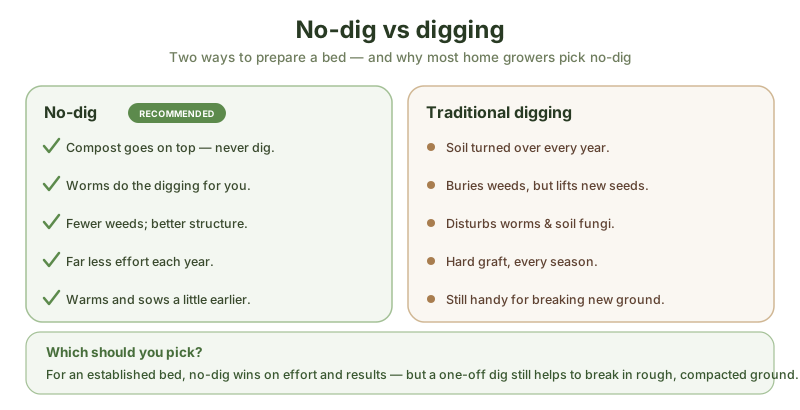
It protects soil structure and the fungal networks. Undisturbed soil keeps its drainage channels and its web of fungal threads, which help plants take up water and nutrients. Left alone, soil gets better at growing things each year rather than needing constant rescue.
It means far fewer weeds. Most soil holds a huge bank of dormant weed seeds, and digging brings a fresh batch up to the light where they germinate. Stop turning the soil and you stop triggering that flush. The layer of compost on top acts as a mulch too, smothering most weeds that try to come up from below.
It holds moisture better. That same surface layer slows evaporation, so beds dry out less quickly in a warm spell — handy in a typical changeable UK summer where you might go from a soggy week to a dry fortnight.
It gives you a ready-made fine tilth. Because you sow and plant into compost rather than rough soil, the surface is already a lovely crumbly tilth — perfect for small seeds and easy on transplanted seedlings. No raking out clods, no breaking your back over a heavy clay bed in spring.
It builds healthy soil over time. Each annual layer of compost feeds the worms and microbes, and they in turn keep improving the ground beneath. This is really just the same principle behind improving your soil — feed the soil, not just the plant — taken to its logical, lowest-effort conclusion.
How to start a no-dig bed
You can make a no-dig bed at almost any time of year in the UK, though autumn and late winter are ideal because the bed has time to settle before the main growing season. Here is how to start, depending on what you are covering.
On grass or rough lawn
This is the classic no-dig starting point, and it is genuinely easy.
- Mow or strim the grass as low as you can. You don't need to remove it — it will rot down and feed the soil.
- Lay cardboard over the whole area. Use plain brown cardboard, remove any plastic tape and labels, and overlap the sheets generously so no light gets through the gaps. Soak it with water as you go.
- Spread 8–10cm of compost on top of the cardboard. Firm it lightly and level it off.
That's it. The cardboard blocks light so the grass and most weeds die off underneath, while the compost on top is ready to grow in. You can plant straight into the compost the same day — there is no need to wait.
On bare soil or an existing bed
Even easier. If you are converting a patch that is already cultivated, you can usually skip the cardboard altogether. Pull out any obvious large weeds, then spread a 5–8cm layer of compost over the surface and plant into it. From then on you simply top up each year.
Over a weedy path or neglected corner
For ground thick with established weeds — an old path, a forgotten corner, a bramble patch you've cut back — be more thorough. Cut everything down to the ground first, lay a double thickness of cardboard with very generous overlaps, then add a deeper layer of compost, 10–15cm if you can. The extra depth and the doubled cardboard give the weeds less chance of finding the light.
Where to find cardboard
Big flattened delivery boxes are ideal and free. Bike shops, furniture shops and supermarkets are usually glad to give away their used cardboard — just strip off any tape, staples and shiny printed labels first, as those won't rot down.
Cardboard, then 8–10cm of compost, plant the same day
- Mow or strim the grass as low as you can; you do not need to remove it.
- Plain brown cardboard, tape off, overlapped so no light gets through, soaked as you go.
- Spread 8–10cm of compost on the cardboard; plant straight into it the same day.
- You can plant straight into the compost the same day — there is no need to wait.
What compost to use and how much
For no-dig, "compost" doesn't mean a rich, concentrated feed — it means a bulky, well-rotted organic material you can plant into and that acts as your mulch. Good options in the UK include:
- Your own garden compost, if you have a heap that has broken down to a dark, crumbly state.
- Well-rotted manure from a local stables or farm — ask for stuff that is at least a year old so it is dark and odourless.
- Bagged peat-free multipurpose or soil improver from a garden centre, useful for topping up or for smaller beds where you can't make enough yourself.
- Council green-waste compost, often sold cheaply in bulk bags or by the trailer-load at recycling centres — excellent value for covering a larger area.
For a brand-new bed, aim for roughly 8–10cm depth. For an established bed each year, a 3–5cm annual layer is plenty. As a rough guide, a 1m x 2m bed needs around 150–200 litres of compost for a fresh 8cm start — so a single bulk bag goes a long way. If you are planning bed sizes, the raised bed planner will help you work out how much compost you'll need before you order.
Maintaining a no-dig bed
Once a bed is made, looking after it is almost embarrassingly simple. Each autumn or winter, after you've cleared the spent crops, spread a fresh layer of compost — around 3–5cm — over the surface. You don't fork it in. The worms take it down over winter, and by spring you have a fresh, fine surface ready to sow into.
Through the season, pull the occasional weed by hand as it appears (there won't be many), and keep adding to your compost heap so you have material for next year. That is genuinely the whole maintenance routine. No digging, no rotavating, no breaking up a slab of clay every spring.
Best time to top up
In the UK, top up beds with compost any time from October to February, while beds are mostly empty. The soil life pulls it down over the colder months, so the bed is ready to go when sowing season arrives.
Honest notes
No-dig isn't magic, and it is worth being realistic about two things.
It uses a lot of compost. This is the main cost and the main effort. Making enough of your own takes time to build up, so in the early years many people buy in bulk green-waste compost or well-rotted manure. Sourcing it cheaply and locally — a friendly stables, a council site, a neighbour with a big heap — makes all the difference. The cost falls steeply once your own composting catches up.
Stubborn perennial weeds need persistence. Annual weeds are easily smothered, but deep-rooted perennials like bindweed, couch grass and ground elder can push up through the cardboard and even through the compost. The bed doesn't fail — you just need to keep pulling these as they appear over the first year or two. Bindweed especially will test your patience, but constant removal of every shoot eventually starves the root. Don't be put off; this is normal, and it gets easier each season.
How it fits a first veg garden
No-dig is one of the kindest ways to start growing, because it removes the most off-putting job in gardening before you've even begun. If you are setting things up from scratch, it pairs naturally with the advice in starting a vegetable garden — pick a sunny, sheltered spot, mark out beds you can reach across without standing on the soil, and make them the no-dig way.
It is forgiving with crops, too. A famous beginner trick is growing potatoes on a no-dig bed: lay your seed potatoes on the cardboard, cover them with a good thick layer of compost, and let them grow up through it. At harvest you simply pull the compost back to find clean tubers, no digging and no spearing them with a fork. If that tempts you, the full method is in our guide to growing potatoes.
Start with one small bed this season. Once you've seen how little weeding it needs and how easily seedlings settle into that soft compost surface, you'll likely never want to dig a vegetable patch again.
Key terms in this guide
- No-dig gardening
- — A way of gardening that avoids digging the soil. Instead you spread compost on the surface and let worms and weather work it in, protecting soil structure and suppressing weeds.
- Mulch
- — A layer of material — compost, bark, leaf mould or straw — spread on the soil surface to lock in moisture, suppress weeds and feed the soil as it breaks down.
- Tilth
- — The crumbly, fine texture of well-prepared topsoil — like coarse breadcrumbs — that seeds germinate and root into easily.
Useful tools for this
Frequently asked questions
What is no-dig gardening?
How do I start a no-dig bed on grass?
Does no-dig really mean less weeding?
Keep reading

How to Start a Vegetable Garden at Home in the UK
A beginner's guide to starting a vegetable garden in the UK — choosing what to grow, preparing the soil, and getting your first crops in.

How to Grow Potatoes in Bags and Beds
Grow your own potatoes in the UK — chitting, planting, earthing up, blight and harvesting first earlies and maincrop, in the ground or in containers.

Improving Your Soil: A Beginner's Guide
Find out what soil you have and improve it with compost, manure, mulch and no-dig — the simple UK guide to building rich, healthy ground that grows more.